If you are building an AI product in 2026, there is a good chance you are watching the wrong number.
You probably know what your favourite model costs per million tokens. You may even have a spreadsheet comparing GPT, Claude, Gemini, DeepSeek, Qwen and the rest. But there is a more important question: are you paying for the right model for every job?
Models are getting better and the number available to developers keeps growing. The gap between sending everything to an expensive frontier model and routing each job to a model that fits it can be very large. That is where things get interesting.
Disclosure: this article contains an affiliate link to TokenRa. If you sign up or buy credits through it, Okiru may earn a commission at no extra cost to you. It does not change what we tell you to test.
The model you start with doesn't have to be the model you keep
When developers start building an AI application, they usually pick a familiar provider. Create an account, get an API key, connect the app, start building. It makes sense.
The problem shows up six months later. The application has grown. There are thousands of API calls a day. You have added a chatbot, document processing, content generation, summarisation and maybe image generation. That small API experiment is now a real operating cost.
And you discover something uncomfortable: you have been using a Ferrari to deliver groceries.
Not every request needs the most expensive model available. A customer asking:
"Summarise this 500-word email."
does not need the same model as:
"Analyse this 200-page legal document and identify contradictions between clauses."
Those are completely different jobs. Yet many AI applications treat them as if they were the same.
The AI API pricing problem nobody talks about
AI API pricing has become very fragmented. G2's 2026 pricing guide puts the range at roughly $0.01 to $30 per million input tokens and $0.02 to $180 per million output tokens, depending on the model. It also found that output tokens typically cost two to eight times more than input tokens (G2).
That turns choosing a model into an optimisation problem. You are no longer asking "Which AI is the smartest?" You are asking "Which model gives me a good enough result for this task at an acceptable cost?" That is a much more useful question.
Think about AI models like employees
Imagine you run a company with ten employees. Would you send your CEO to answer every customer email? Probably not. One person handles administration, another handles sales, another handles technical work, and your most experienced executive handles the decisions that need their expertise.
AI applications should increasingly work the same way:
- Simple task: use a lower-cost model.
- Complex reasoning: use a stronger model.
- Coding: use a model that is good at code.
- Images or video: use a model built for them.
The goal is not to find the best AI model. It is to find the best model for the job.
Why Chinese AI models are worth a look
One of the biggest changes in the market has been the rise of models from Chinese AI companies. DeepSeek, Kimi, GLM, Qwen, MiniMax and others now come up regularly in developer discussions because they offer a different mix of price, capability and availability.
This is no longer only a conversation about "cheap alternatives". Developers are evaluating these models on their own strengths. The price spread is real, though. When we checked TokenRa's model list on 5 October 2026, DeepSeek V4.1 Flash was listed at $0.42 per million output tokens and Qwen 3.8 Max at $4.57, more than ten times as much (TokenRa). Prices change, so check the current list before you plan around them.
The hard part usually isn't finding an interesting model. It is getting access to it and wiring it into your application without creating another pile of infrastructure to maintain.
The problem with having five AI providers
Imagine your application uses one provider for text, another for reasoning, a third for images, a fourth for video and a fifth for an experimental model. You now have:
- five accounts
- five API keys
- five billing systems
- five sets of documentation
- five places to monitor usage
- five potential points of failure
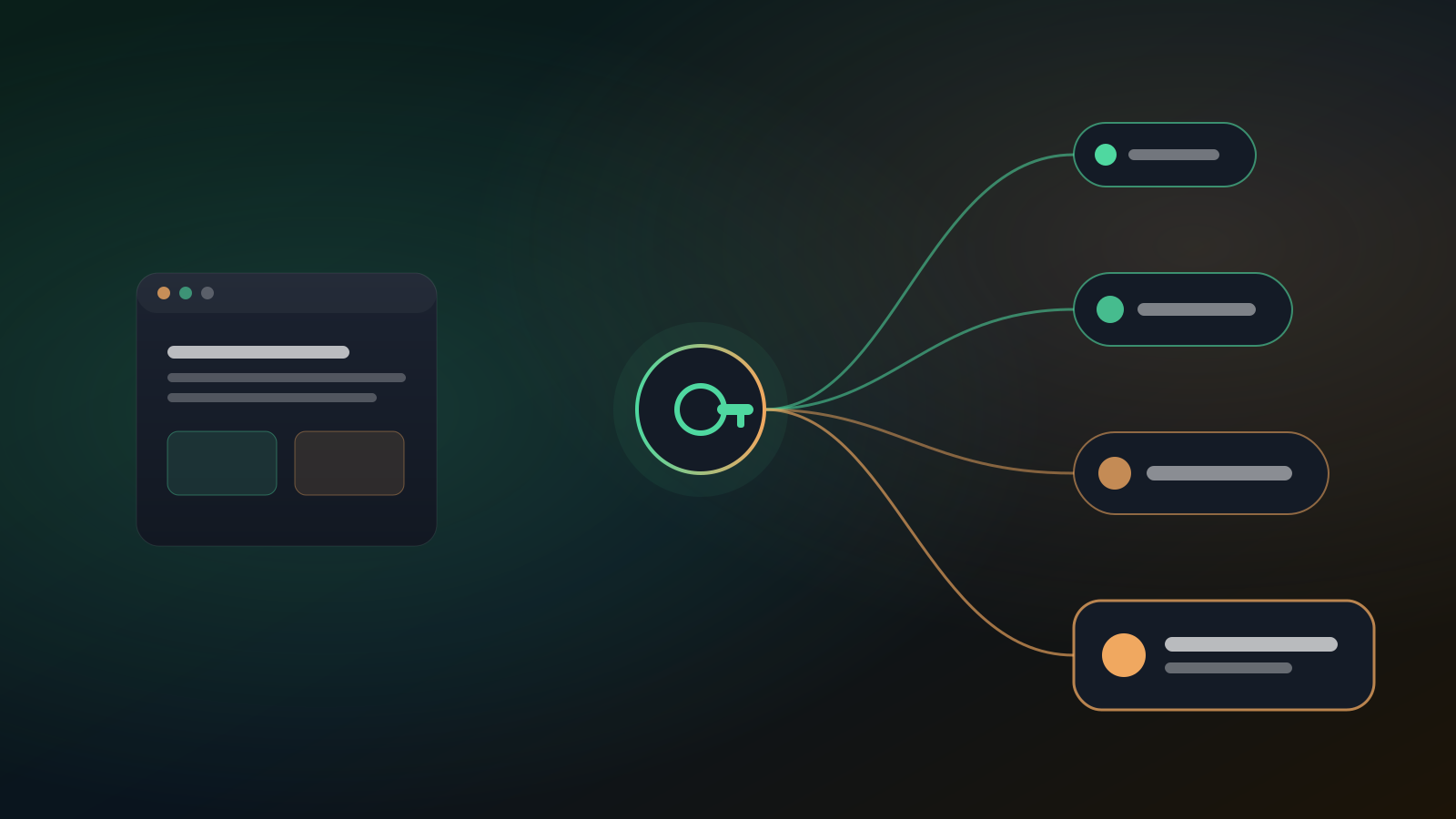
Every time you want to test another model, you may have another integration to build. That is why API gateways are getting attention. Instead of your application having to understand every provider separately, a gateway sits between your application and the models.
So, what exactly is TokenRa?
TokenRa describes itself as a unified AI API gateway that gives developers access to text, image, video and audio models through one account and one API key. Usage, billing and model management sit in one console (TokenRa).
A few details matter for developers:
- OpenAI-compatible where supported. Applicable text models accept OpenAI-compatible chat completion requests, so if your code already uses that format, testing a new model can be a small change. Image and video models use their own endpoints.
- Usage-based billing. There is no platform subscription fee. Text models are charged per million tokens and image models per request.
- Low entry point. The minimum top-up is $10, and credits do not expire while the account is active (TokenRa FAQ).
That makes it practical for developers who don't want another monthly subscription just to run an experiment.
Don't sign up because of the model list. Run your own price test.
A long list of models is not a reason to sign up. Do something more useful instead.
Take one real task from your application, for example "Generate a 500-word product description". Run it through your current model and record:
- response quality
- response time
- input tokens
- output tokens
- cost
Then run the same task through two or three alternatives. Now you have something more valuable than a public benchmark: your own benchmark. The cheapest model on someone else's spreadsheet might not be the cheapest for your workload once you count retries and editing, and the smartest model might not add enough value to justify its price.
Want to see whether you can lower your AI API costs?
Test several AI models through one API gateway and compare what actually works for your workload.
Affiliate link. If you sign up or buy credits through it, Okiru may earn a commission at no extra cost to you.
A simple experiment you can run this week
Suppose you run an AI customer-support assistant that handles 10,000 questions a month. Instead of sending everything to your most expensive model, sort the questions into three levels.
Level 1: simple. "What are your opening hours?" "How do I reset my password?" "Where is my order?" Use a lower-cost model.
Level 2: moderate. "Which product should I buy?" "Compare these two plans." "Why did my invoice change?" Use a mid-range model.
Level 3: complex. "Analyse this customer's full account history and recommend a resolution." Use the expensive reasoning model.
Now your application isn't using one AI. It is using an AI workforce, and you only pay senior rates for senior work. Track the cost per level for a month and you will know exactly where your bill comes from.
The real selling point isn't "more AI"
There are already plenty of places to discover AI models. The more interesting proposition is this: what if your application didn't have to be locked into one AI provider?
For a developer, a gateway can mean less friction when trying alternatives. For a startup, it can mean more control over infrastructure costs. For a product team, it can mean testing a new model without rebuilding the application around another provider.
There is a catch, and you should know it
We are not going to tell you that every new AI platform is brilliant. TokenRa does not publish a founding date or much company background on its website, and it is an intermediary: the upstream model providers still decide much of the capability, availability and policy. TokenRa itself says that prompts, images, videos and outputs sent to upstream models may be processed under the applicable provider's policy, and that API keys should stay on your server, never in browser code or public repositories (TokenRa).
For South African businesses there is another check. If your prompts contain personal information about customers or employees, POPIA's rules on transferring personal information outside South Africa (section 72) apply. Know where that data goes before you send it.
So we would not move a critical production workload or sensitive data onto any new gateway without testing first. Before making it a production dependency, test:
- latency
- reliability
- model availability
- rate limits
- error handling
- data and privacy policies
- support response
- actual cost per task
The bigger shift: stop asking "Which AI is best?"
In 2023, the question was "Which AI should I use?" Then it became "Which AI model is smartest?" Now the better question is "Which model should handle this particular task?"
Increasingly, your software will make that decision itself. A support application might send a simple question to one model, a complicated request to another and an image request to a third. The user doesn't care. They just get the answer, and the application handles the complexity behind the scenes.
Should you try TokenRa?
If you are looking for a chatbot for personal use, probably not. TokenRa is mainly worth a look if you are:
- building an AI application or AI agents
- working directly with APIs
- trying to reduce your AI API costs
- building a multi-model workflow
- evaluating Chinese AI models such as DeepSeek, Kimi, GLM or Qwen
- looking for image or video model APIs
- tired of managing several separate AI API accounts
If that sounds like you, run a small experiment. Don't migrate your whole application. Put $10 into an account, take one real workload and test it against what you use now. If the numbers work, you have learnt something useful. If they don't, you have spent very little finding out.
Run your own AI price test
Start with the $10 minimum top-up, pick one real task and compare models side by side.
Affiliate link. If you sign up or buy credits through it, Okiru may earn a commission at no extra cost to you.
Our verdict
We are not recommending TokenRa because "AI is the future". That's boring. The more interesting reason to look at it is that AI infrastructure has become a cost and architecture problem. The number of capable models keeps growing, prices vary widely, different models are good at different things, and developers need the freedom to switch models without rebuilding their application. TokenRa's unified gateway is designed around exactly that problem.
But don't take our word for it. Test your own workload. Find out what one real task costs, then ask whether you really need the most expensive model to do it.
The next competitive advantage in AI might not be access to the most powerful model. It might be knowing when not to use it.
Not sure which AI tools fit your business in the first place? Our free AI Tool Advisor is a searchable directory of vetted AI tools, and our AI training and advisory team can help you set up workflows where AI does the heavy lifting and your people keep the judgement.
Sources
- G2: How Much Do AI APIs Cost? A 2026 Pricing Guide
- TokenRa: About TokenRa (checked 5 October 2026)
- TokenRa: FAQ (checked 5 October 2026)
- TokenRa: model list and pricing (checked 5 October 2026)
Okiru. Smart data, smarter transformation.