Two stories have been doing the rounds in South African business news over the past few weeks. One is a survey of 800 small businesses. The other is the Presidency restating its commitment to B-BBEE. Read together, they point at the same problem.
What the Survey Found
The second State of the SMME in South Africa report, researched by World Wide Worx and published by the Shoprite Group, surveyed 800 small, medium and micro enterprises (Engineering News coverage). The headline numbers are more upbeat than you might expect:
- 42% describe their business as growing and expanding, up from 33% in last year's survey.
- 85% expect moderate to high growth in the year ahead.
- 53.6% report net profit after tax above 10%.
So most of these businesses are not failing. They are profitable and they are optimistic. The question the report asks is why so few of them grow beyond micro scale.
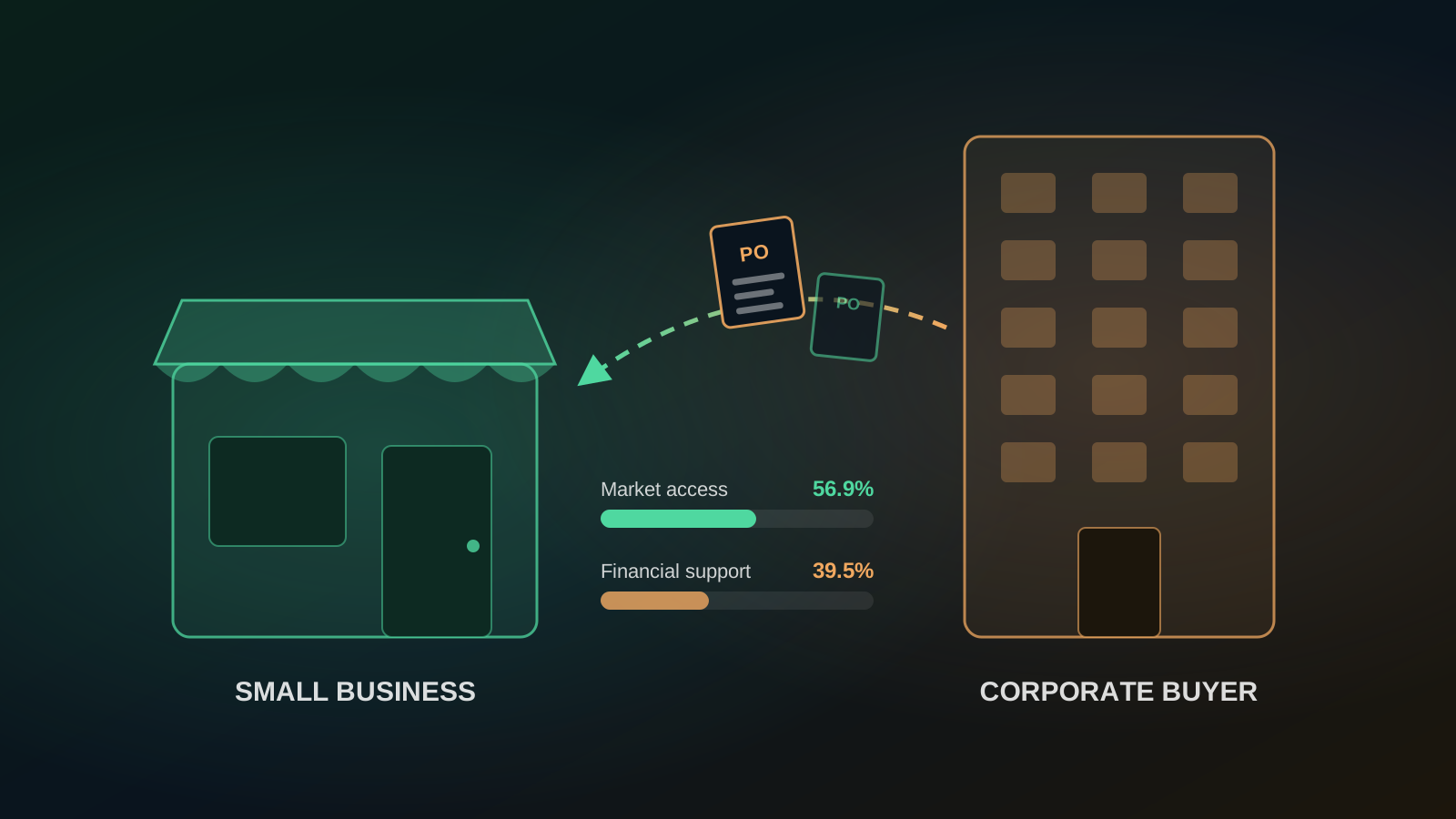
The answer is not the one most people assume. When asked what they need to grow, 56.9% said access to markets. Financial support came second at 39.5%, and digital tools third at 29.7%. And 78.1% rated regular orders from large corporations as important or very important, ranking them above mentorship, grants, training and loans.
The funding picture explains part of this. 90.9% of respondents rely on their own resources and personal networks, only 9.7% use bank loans, and 57.4% have never applied for funding at all. Many small businesses have learnt to grow without outside money. What they cannot build on their own is a steady customer large enough to justify hiring, investing in equipment and planning beyond next month.
"An order from a large customer can create a significant opportunity." Arthur Goldstuck, CEO, World Wide Worx
Where B-BBEE Comes In
At the start of October, Minister in the Presidency Khumbudzo Ntshavheni restated government's position that B-BBEE remains a key redress tool, and that Cabinet supports a review to strengthen the framework (BusinessTech). Whatever comes out of that review, one part of the existing scorecard already speaks directly to what the SMME report describes: Enterprise and Supplier Development (ESD).
ESD on the Generic Codes scorecard covers three things:
- Preferential procurement: how much a measured entity spends with empowering suppliers, including black-owned EMEs and QSEs.
- Supplier development: support that helps businesses already in, or entering, its supply chain to grow.
- Enterprise development: support for black-owned businesses outside its supply chain.
In other words, the scorecard already rewards large companies for doing the thing small businesses say they need most: buying from them, regularly.
The gap is that ESD is often run as a compliance exercise. Grants are paid, points are claimed, and the supplier never gets a purchase order. The SMME report suggests that is the wrong way round. A small business that receives a grant but no orders has been helped for a year. A small business that becomes a reliable supplier has been helped for as long as the relationship lasts.
If You Are a Small Business
Being a good business is not enough to win corporate orders. You also have to be easy to buy from. In practice that means:
- Have your B-BBEE status ready. EMEs, and QSEs that are at least 51% black-owned, can usually confirm their level with a sworn affidavit instead of a full verification. Keep it current, because procurement teams will ask for it.
- Get your paperwork in order. Tax clearance, company registration, bank confirmation letter and a simple capability statement. Missing documents remove you from a shortlist faster than price does.
- Show you can deliver consistently. Corporates worry less about your size than about whether you will deliver the same quality every month. Records of past delivery, references and basic financial statements all help.
- Look for supplier development programmes, not just funding. Many large buyers run them, and they are usually the most direct route into a supply chain.
If You Are a Large Business
Your ESD budget can do more than earn points. Questions worth asking:
- How much of your ESD spend leads to actual purchase orders, rather than grants alone?
- Are your supplier development beneficiaries tracked against delivery and growth, or just against the cheque you wrote?
- Are your procurement and transformation teams working from the same supplier list?
Well-designed ESD shows up in the scorecard and in a supply chain that is more local, more resilient and easier to audit.
The Okiru View
At Okiru, we see the same pattern in the organisations we work with. The scorecard is usually not the problem; the data behind it is. Spend sits in one system, supplier certificates in another, and development support in a spreadsheet nobody owns. Our approach follows the Okiru Way: Structure the data and the supplier base, Implement programmes that link development support to real procurement, and Optimise using evidence that stands up at verification. AI helps us extract, track and validate that evidence. Our consultants remain responsible for the strategy and the judgement calls.
The SMME report gives a clear message. Small businesses do not mainly want more advice or more loans. They want customers. B-BBEE already gives large companies a reason to become those customers. The task is to make that happen in practice. If you want to talk through your ESD programme, get in touch with Okiru.
Figures in this article are taken from published coverage of the State of the SMME 2026 report (Engineering News, 18 September 2026) and of the Minister in the Presidency's remarks (BusinessTech, 5 October 2026). B-BBEE information is general guidance and not legal advice. Your sector code and circumstances may change how the rules apply to you.
Smart data, smarter transformation.