ElevenLabs is known for incredibly realistic AI voices. But for businesses, the more interesting opportunity isn't making AI sound human — it's what that AI can actually do during the conversation.
For most small businesses, missing a phone call seems like a small problem.
Until that call was from a potential customer.
A salon owner is busy with a client. A construction company is on site. An events company is setting up equipment. A landscaping team is out working. The phone rings, nobody answers, and the customer simply tries the next business on Google.
AI voice technology is beginning to offer another option.
ElevenLabs has become well known for generating realistic artificial voices, but its technology has expanded beyond simply converting written text into speech. Its conversational AI platform allows businesses to create voice agents capable of having real-time conversations with customers.
That changes the conversation entirely.
The real opportunity isn't giving AI a human voice. It's giving that voice something useful to do.
A Voice Assistant Shouldn't Just Answer the Phone
Imagine calling a salon and saying:
"Hi, do you have space for braids this Saturday?"
An AI assistant that simply responds politely isn't particularly useful.
A useful assistant would need to understand what the customer wants, check the business's actual availability and either book the appointment or explain what alternatives are available.
The same principle applies across industries.
A construction company could receive a request for a quotation.
A rental company could receive an enquiry about equipment availability.
An events company could be asked whether sound equipment is available for a particular date.
A customer might call a small retailer asking whether an item is currently in stock.
These conversations become valuable when the AI can connect to the systems containing that information.
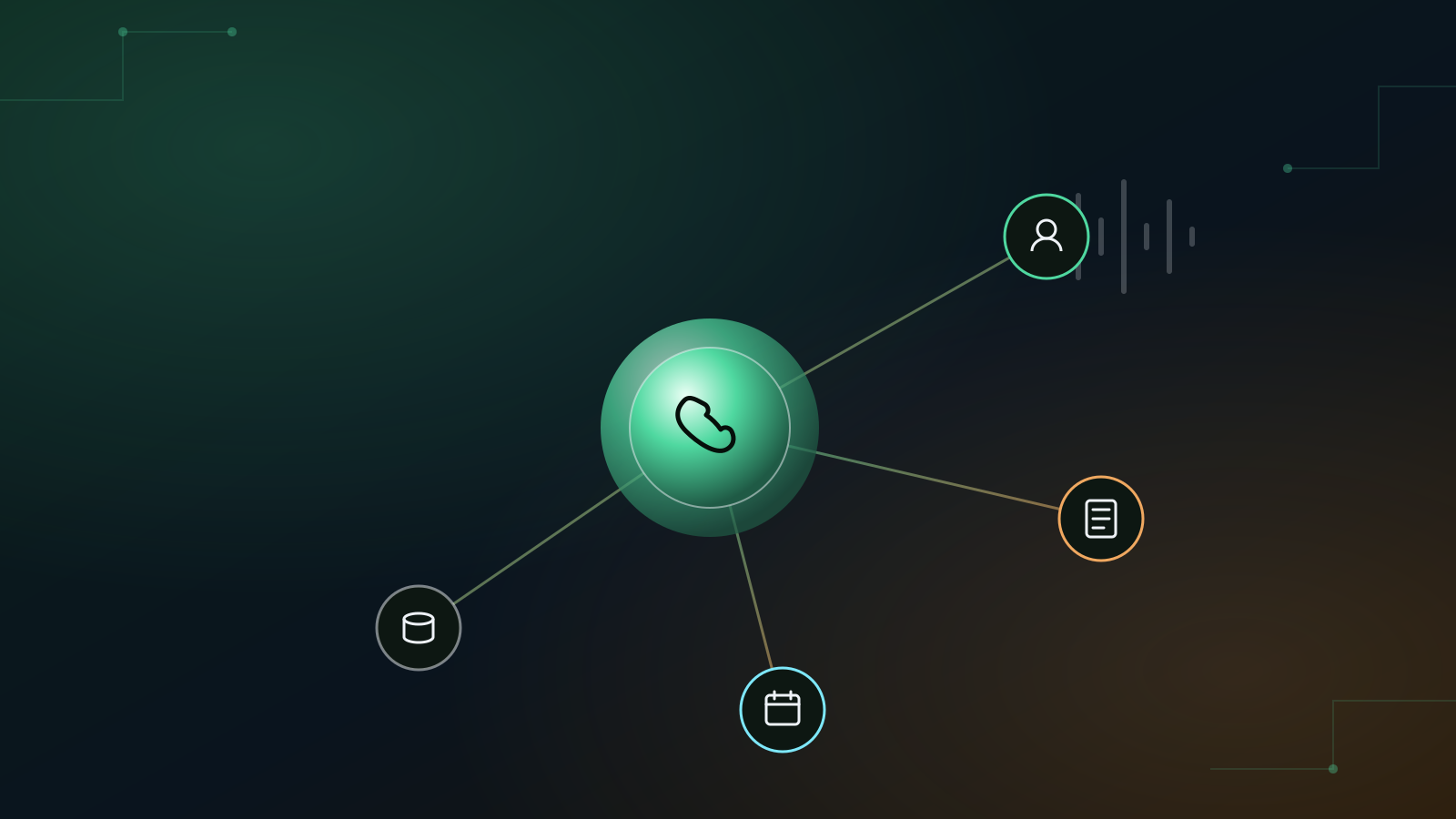
ElevenLabs allows its agents to interact with external systems through tools and webhooks. Those connections can retrieve information from external databases or APIs and can trigger actions such as updating information or scheduling something.
That is where things become interesting for a platform like BizBrain.
Where ElevenLabs and BizBrain Could Meet
BizBrain is being designed around a simple idea: small businesses shouldn't need five different systems and endless manual administration to keep their operations organised.
Customer information, leads, quotations, bookings, tasks, inventory and other business activity should feed into one operational system.
Now imagine adding a conversational voice layer to that.
A potential customer calls an events company and says:
"I'm having a wedding for 150 people on 17 October and need a sound system."
Instead of somebody writing the information on a piece of paper or trying to remember it later, an integrated AI assistant could collect:
- The customer's name
- Contact details
- Event date
- Location
- Number of guests
- Equipment requirements
- Budget or quotation request
BizBrain could then receive that information and create a new lead.
A quotation task could be generated.
The enquiry could be assigned to the correct person.
The customer conversation would stop being an isolated phone call and become part of the company's actual workflow.
ElevenLabs specifically documents webhook use cases including CRM lookups, inventory checks, lead capture, support-ticket creation and price quotations.
That is far more useful than simply having an impressive AI receptionist.
The CRM Should Give the Voice Its Memory
There is another problem with traditional business calls.
Customers repeat themselves constantly.
They speak to one employee on Monday, another on Wednesday and someone else the following week. Each conversation often starts from zero.
A properly integrated system could work differently.
If a returning customer contacts the business, BizBrain could hold the relevant customer history while the AI interface handles the conversation.
Instead of:
"Can I have your details again?"
the interaction could eventually become:
"I can see you previously requested a quotation for the landscaping project. Are you calling about that project?"
ElevenLabs supports post-call webhooks containing conversation transcripts, analysis and metadata, which means information from completed conversations can technically be passed into another application for processing and storage.
The important distinction is that ElevenLabs provides the conversational technology.
BizBrain would provide the business context around the conversation.
Don't Automate Everything
There is a temptation with AI to ask:
"How much of this can we automate?"
That is probably the wrong question.
The better question is:
Which parts should we automate?
Checking opening hours?
Probably.
Capturing an enquiry?
Absolutely.
Checking whether an appointment slot is available?
Potentially.
Automatically negotiating a R200,000 construction contract?
Probably not.
Some conversations require judgment, empathy, negotiation or authority that should remain with a person.
The best system therefore isn't one that removes humans completely.
It's one that knows when they are needed.
ElevenLabs includes system capabilities for transferring conversations between agents and managing conversational flows, while external tools can connect an agent to other business systems.
The objective shouldn't be human versus AI.
It should be determining which participant should handle each part of the process.
Start With the Calls You're Already Missing
A small business doesn't need to build an enormous AI call centre on day one.
Start with one problem.
Maybe customers frequently call after hours.
Let the AI capture those enquiries.
Maybe employees repeatedly answer the same five questions.
Automate those first.
Maybe quotation requests arrive through calls and somebody manually enters them into the CRM afterwards.
Connect that process.
Then measure what happens.
Did fewer enquiries disappear?
Did customers receive responses faster?
Did employees spend less time doing administration?
Did more leads become quotations?
Did more quotations become paying customers?
If the answer is yes, expand the system.
If not, improve it.
The Bigger Opportunity Isn't Voice AI
ElevenLabs demonstrates something much bigger happening across artificial intelligence.
AI is moving away from being something businesses simply talk to and towards something that can participate in actual workflows.
The voice might be ElevenLabs.
The intelligence might come from an AI model.
But the business still needs somewhere to remember the customer, track the opportunity, generate the quotation, manage the booking, assign the task and understand what happened afterwards.
That's the role BizBrain can play.
For small businesses, the future probably isn't an AI tool sitting beside the business.
It's AI becoming part of how the business operates.
And when that happens, an unanswered phone call doesn't necessarily have to become a lost customer.
It could become a lead.
Then a quotation.
Then a customer.
The voice starts the conversation. BizBrain makes sure the business follows through.